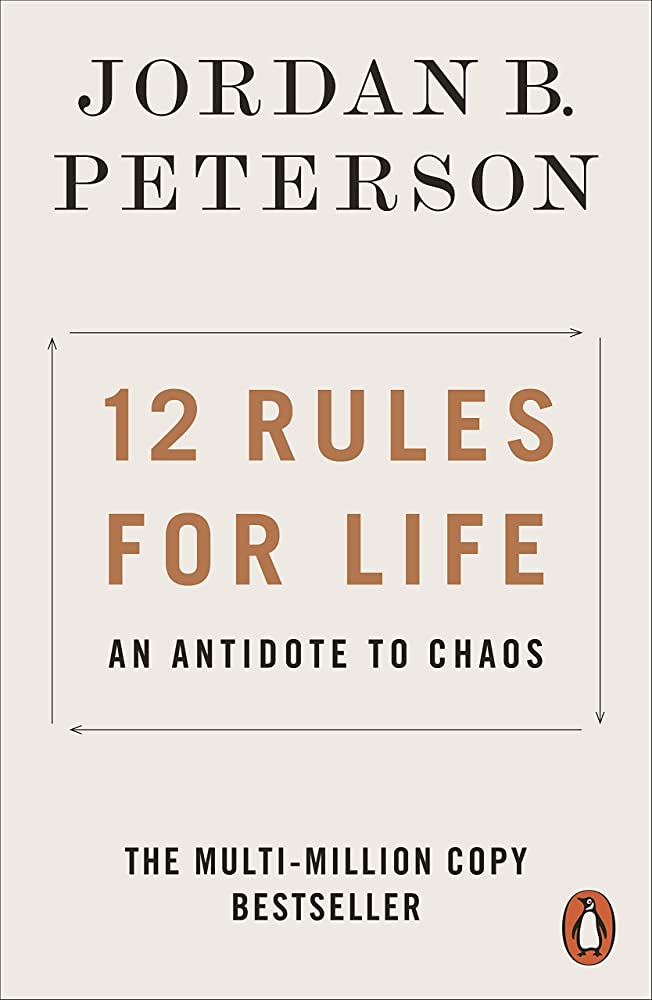
12 Rules for Life: An Antidote to Chaos is a bestselling self-help book written by Canadian clinical psychologist Jordan Peterson. The book presents a set of 12 rules that Peterson argues are essential for leading a fulfilling and meaningful life. Each rule is grounded in psychological research and is accompanied by personal anecdotes and insights.
“Set your house in perfect order before you criticize the world.”
Jordan Peterson

The book is divided into two parts, each of which focuses on a different aspect of personal growth and development. In Part One, Peterson explores the nature of human suffering and the role of personal responsibility in overcoming it. He argues that suffering is an inevitable part of life, but that by taking responsibility for our own lives and actions, we can find meaning and purpose in the face of adversity.
In Part Two, Peterson presents his 12 rules for life, which are as follows:
- Stand up straight with your shoulders back
- Treat yourself like someone you are responsible for helping
- Make friends with people who want the best for you
- Compare yourself to who you were yesterday, not to who someone else is today
- Do not let your children do anything that makes you dislike them
- Set your house in perfect order before you criticize the world
- Pursue what is meaningful (not what is expedient)
- Tell the truth – or, at least, don’t lie
- Assume that the person you are listening to might know something you don’t
- Be precise in your speech
- Do not bother children when they are skateboarding
- Pet a cat when you encounter one on the street
Each rule is accompanied by a detailed explanation and analysis, drawing on a range of sources including religious texts, mythology, and scientific research. Peterson argues that following these rules can help readers lead more fulfilling and meaningful lives, and can help them to overcome the chaos and suffering that are inherent in human existence.
Throughout the book, Peterson emphasizes the importance of personal responsibility and self-improvement. He argues that by taking responsibility for our own lives and actions, we can find meaning and purpose, and can make positive changes in the world around us. He also emphasizes the importance of cultivating a sense of order and discipline in our lives, arguing that this is essential for achieving our goals and finding fulfillment.
In addition to his 12 rules, Peterson also offers advice on a range of other topics, including relationships, parenting, and mental health. He draws on his own experiences as a clinical psychologist and his extensive research into human behavior to provide practical advice for readers looking to improve their lives.
Overall, 12 Rules for Life is a thought-provoking and engaging self-help book that offers practical advice for overcoming adversity and finding meaning in life. Peterson’s emphasis on personal responsibility and self-improvement, combined with his engaging writing style and personal anecdotes, make the book a must-read for anyone looking to improve their life and find greater meaning and purpose.
 Book Movie Technology Reviews Fitness Wellness Health Tips