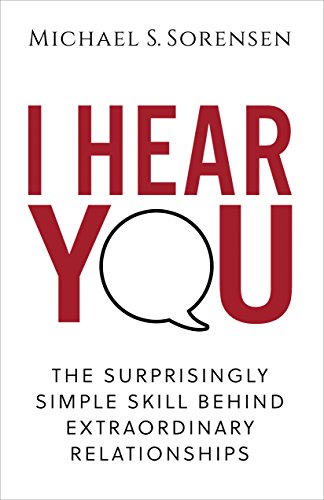
“I Hear You: The Surprisingly Simple Skill Behind Extraordinary Relationships” by Michael S. Sorensen is a book about the power of validation in building strong and meaningful relationships. The author argues that validation, which involves acknowledging and accepting another person’s thoughts and feelings, is a crucial but often overlooked aspect of communication. The book offers insights and strategies for practicing validation, which can help individuals improve their relationships with family, friends, colleagues, and even strangers.
“Validation is the glue that holds relationships together. It’s the skill that keeps people talking, compromises happening, and conflicts from becoming catastrophes. It’s the ability to say to someone, ‘I see you. I hear you. You matter to me.’”
Michael S. Sorensen

The book is divided into three main sections. The first section, “The Power of Validation,” explores the benefits of validation and the common misconceptions about it. The author argues that validation is not the same as agreement or approval, but rather a way of showing empathy and respect for another person’s perspective. He discusses how validation can help build trust, reduce conflict, and foster connection, and he provides examples of how validation has been used in various contexts, such as therapy, parenting, and customer service.
The second section, “The Four Elements of Validation,” outlines the four key components of validation: listening, understanding, acknowledging, and respecting. The author explains how each of these components contributes to effective validation and provides practical tips for incorporating them into everyday interactions. He also discusses the common barriers to validation, such as defensiveness, judgment, and distraction, and offers strategies for overcoming them.
The third section, “Validation in Practice,” explores how to apply validation in different types of relationships, including romantic partnerships, friendships, family relationships, and professional relationships. The author provides examples of how validation can be used to improve communication, resolve conflicts, and build trust in each of these contexts. He also discusses the role of validation in creating a positive organizational culture, and offers tips for leaders and managers who want to promote validation within their teams.
Throughout the book, the author uses a variety of real-life examples and anecdotes to illustrate his points. He draws on research from psychology, neuroscience, and other fields to explain why validation is so important and how it works. He also provides numerous exercises and activities for readers to practice validation in their own lives, such as reflective listening, mirroring, and paraphrasing.
One of the key themes of the book is the importance of empathy in effective communication. The author argues that empathy, which involves understanding and feeling another person’s emotions, is essential for validation. He provides a number of strategies for developing empathy, such as active listening, perspective-taking, and mindfulness.
Another key theme of the book is the importance of authenticity in relationships. The author argues that validation is most effective when it comes from a place of genuine caring and interest in the other person. He encourages readers to be authentic in their communication and to avoid using validation as a manipulative tactic.
Overall, “I Hear You: The Surprisingly Simple Skill Behind Extraordinary Relationships” is a practical and insightful guide to the power of validation in building strong and meaningful relationships. The author’s strategies and exercises can help individuals improve their communication skills, reduce conflict, and foster deeper connections with the people in their lives.
One of the most memorable quotes from the book is: “Validation is not just about what you say; it’s about how you say it. It’s about showing someone that you understand and accept them, even if you don’t necessarily agree with them. And that’s a powerful thing.” This quote encapsulates the author’s message that validation is a simple but powerful skill that can have a profound impact on the quality of our relationships.
 Book Movie Technology Reviews Fitness Wellness Health Tips