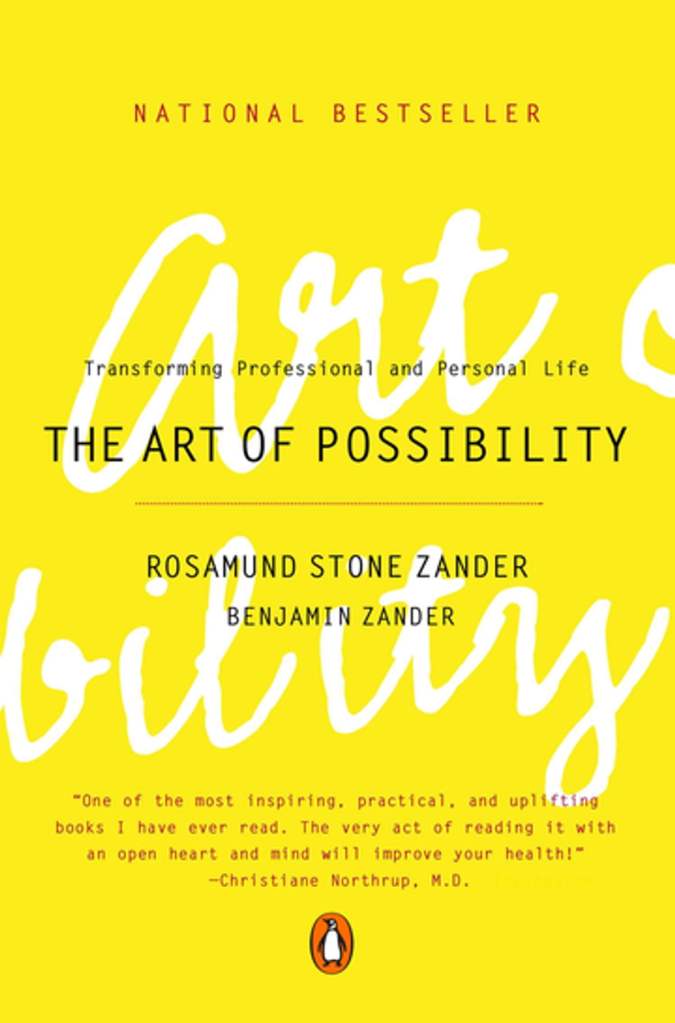
“The Art of Possibility” is a self-help book written by Rosamund Stone Zander, a therapist, and Benjamin Zander, a conductor and music educator. The book presents a series of principles and practices designed to help readers shift their perspective and embrace a mindset of possibility, creativity, and growth.
“We are all inventing our own lives, but we cannot see the whole invention because we are inside the jar. If we can reach out to some greater reality, we can achieve the extraordinary.”
Rosamund Stone Zander

The book is divided into twelve chapters, each of which explores a different principle of the “Art of Possibility”. These principles include:
- It’s all invented: The first principle is the idea that our perceptions and interpretations of the world are not objective or fixed, but rather are shaped by our beliefs and assumptions. By recognizing that our perceptions are inventions, we can open ourselves up to new possibilities and interpretations.
- Give yourself an A: The second principle encourages readers to adopt a mindset of possibility by imagining themselves already achieving their goals and giving themselves an “A” grade. This helps to shift the focus from fear and self-doubt to confidence and possibility.
- The way things are: The third principle is about recognizing that the way things currently are is not necessarily the way they have to be. By embracing the mindset of possibility, we can begin to see new paths and solutions that were previously hidden.
- Leading from any chair: The fourth principle emphasizes that leadership is not limited to those in positions of authority. By taking ownership of our actions and attitudes, we can all become leaders and positive agents of change.
- Rule number 6: The fifth principle is about letting go of the need to be right or to have control. By embracing the idea of “rule number 6” (which is to not take oneself too seriously), we can approach situations with greater openness and flexibility.
- The way things are not: The sixth principle is about exploring what is possible beyond our current limitations and assumptions. By questioning our beliefs and assumptions, we can expand our sense of what is possible and achieve new levels of growth and creativity.
- Giving way to passion: The seventh principle encourages readers to follow their passions and embrace their natural talents and strengths. By aligning our actions with our passions, we can create a sense of purpose and fulfillment in our lives.
- Lighting a spark: The eighth principle is about creating a sense of possibility and excitement in others by inspiring and encouraging them to reach their potential.
- Being the board: The ninth principle is about taking ownership of our lives and recognizing that we have agency and influence in shaping our own destinies.
- Creating frameworks for possibility: The tenth principle is about creating structures and systems that foster creativity and possibility, such as brainstorming sessions or supportive communities.
- Telling the WE story: The eleventh principle is about recognizing our interconnectedness and our shared experiences. By telling stories that emphasize our shared humanity, we can create a sense of empathy and connection with others.
- Being a contribution: The twelfth principle is about finding meaning and purpose in contributing to others and to the world. By focusing on giving rather than getting, we can create a sense of fulfillment and connection with others.
Throughout the book, the authors use personal anecdotes, examples from music and art, and practical exercises to illustrate and reinforce the principles of the “Art of Possibility”. They emphasize that the mindset of possibility is not just a way of thinking, but a way of being and living in the world. By embracing the principles of the “Art of Possibility”, readers can create a more fulfilling and meaningful life.
One of the key themes of the book is the power of perspective and the importance of cultivating a mindset of possibility. The authors argue that by shifting our perspective and embracing a mindset of possibility, we can overcome limiting beliefs and achieve greater levels of creativity, growth, and success.
Another important theme of the book is the power of connection and empathy. The authors emphasize the importance of recognizing our interconnectedness with others and cultivating empathy and understanding towards others. They argue that by seeing others as human beings with their own perspectives and experiences, we can create a more compassionate and connected world.
The authors use personal anecdotes and examples from their own lives and experiences to illustrate the power of connection and empathy. They emphasize that by cultivating empathy and understanding, we can create a more positive and supportive environment for ourselves and others.
Overall, “The Art of Possibility” is a powerful and inspiring book that encourages readers to embrace a mindset of possibility and cultivate greater levels of creativity, growth, and success. The book is filled with practical exercises, personal anecdotes, and examples from music and art, making it an engaging and accessible read for anyone seeking to improve their mindset and live a more fulfilling life. The authors’ emphasis on connection, empathy, and shared humanity make this book a timely and important read for our increasingly interconnected world.
 Book Movie Technology Reviews Fitness Wellness Health Tips