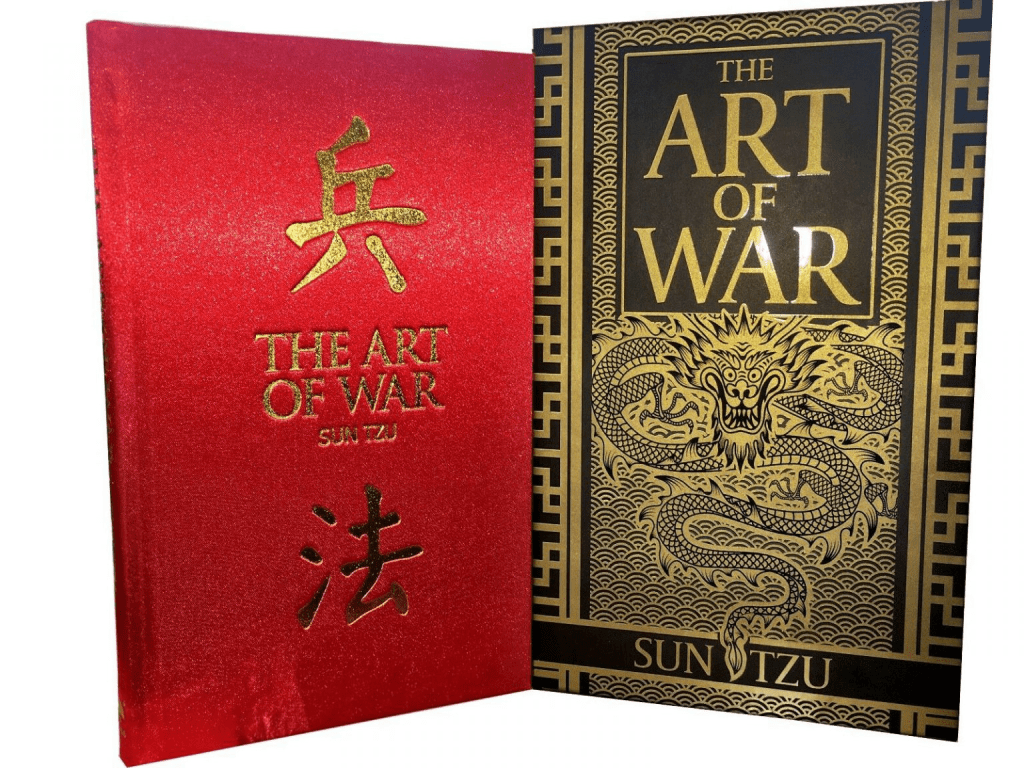
The Art of War is an ancient Chinese military treatise that is believed to have been written by Sun Tzu, a military general and strategist, during the 5th century BC. The text is considered one of the most influential works on military strategy and has been studied and applied by military leaders, business executives, and politicians throughout history.
“All warfare is based on deception.”
Sun Tzu

The Art of War is divided into 13 chapters, each of which focuses on a different aspect of warfare. The first chapter introduces the concept of “the art of war” and emphasizes the importance of careful planning and preparation before engaging in battle. It also stresses the need for flexibility and adaptability, as well as the importance of understanding oneself and one’s enemy.
The second chapter focuses on the importance of knowing one’s enemy and understanding their strengths and weaknesses. It also emphasizes the importance of using intelligence and deception to gain an advantage over the enemy.
The third chapter discusses the importance of positioning and how to choose the best location for battle. It also emphasizes the importance of understanding the terrain and using it to one’s advantage.
The fourth chapter focuses on the use of spies and intelligence gathering, and how to use this information to gain an advantage over the enemy.
The fifth chapter discusses the importance of the use of tactics and how to choose the right strategy for different situations. It also emphasizes the importance of being able to adapt to changing circumstances and being able to improvise when necessary.
The sixth chapter focuses on the importance of discipline and the need for soldiers to obey orders without question. It also emphasizes the importance of maintaining morale and motivation among troops.
The seventh chapter discusses the importance of the use of weapons and how to choose the right weapon for different situations. It also emphasizes the importance of training and preparation in order to maximize the effectiveness of weapons.
The eighth chapter focuses on the importance of the use of fire and the need for soldiers to understand the principles of fire in order to use it effectively.
The ninth chapter discusses the importance of the use of water and the need for soldiers to understand the principles of water in order to use it effectively.
The tenth chapter focuses on the importance of the use of terrain and how to use the terrain to one’s advantage in battle.
The eleventh chapter discusses the importance of the use of spies and how to use them effectively to gain an advantage over the enemy.
The twelfth chapter focuses on the importance of flexibility and the need to be able to adapt to changing circumstances in order to achieve victory.
The thirteenth and final chapter discusses the importance of knowing when to engage in battle and when to avoid it. It also emphasizes the importance of knowing when to negotiate and when to fight.
In summary, The Art of War is a comprehensive treatise on military strategy that emphasizes the importance of careful planning and preparation, understanding oneself and one’s enemy, adaptability, intelligence gathering, tactics, discipline, training, and the use of weapons, fire, water, and terrain. It also stresses the importance of flexibility, adaptability, and knowing when to engage in battle and when to avoid it. The principles outlined in The Art of War have been applied not only to warfare, but also to business, politics, and other areas where strategic planning and decision-making are critical to success.
 Book Movie Technology Reviews Fitness Wellness Health Tips