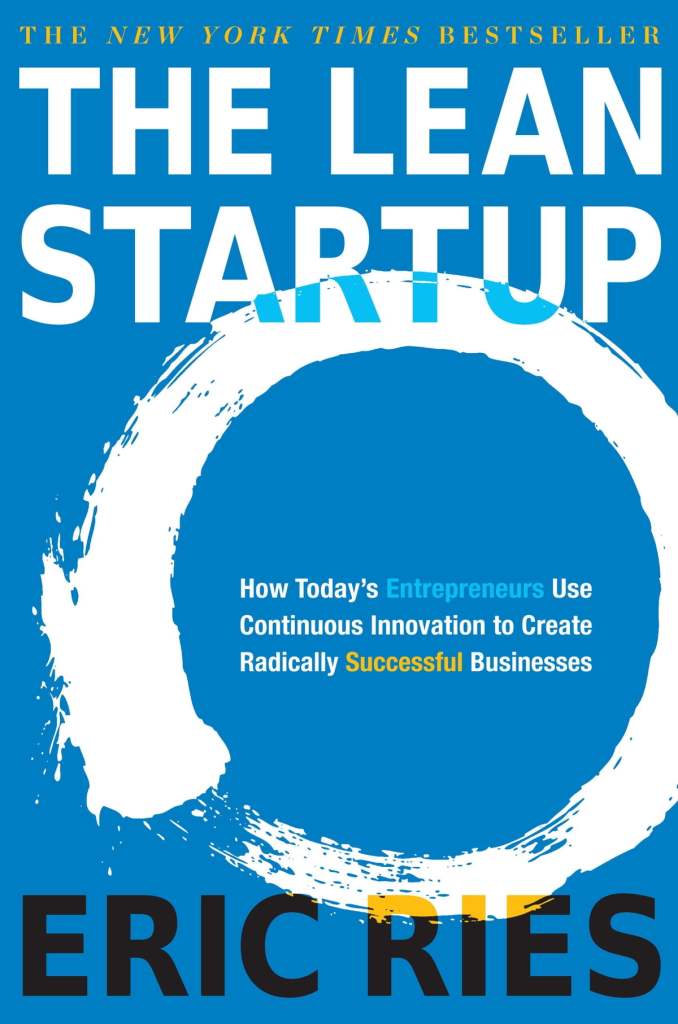
The Lean Startup is a popular business book written by entrepreneur Eric Ries. It presents a methodology for developing and launching successful startups through continuous innovation and experimentation. The book is based on Ries’ experiences as a startup founder and his observations of successful startups in Silicon Valley..
“The only way to win is to learn faster than anyone else.”
Eric Ries

The Lean Startup is organized into three parts, each covering a different aspect of startup development and growth. Here is a summary of each part:
Part I: Vision
The first part of the book introduces the Lean Startup methodology and explains its key principles. These principles include:
- Continuous Innovation: Startups should constantly experiment and innovate in order to improve their products and services.
- Validated Learning: Startups should focus on gathering data and feedback from customers in order to validate their assumptions and make informed decisions.
- Build-Measure-Learn: Startups should use a feedback loop of building a minimum viable product (MVP), measuring its effectiveness, and learning from the results.
Part II: Steer
The second part of the book focuses on the process of steering a startup towards success. It covers topics such as:
- Creating a Minimum Viable Product (MVP): Startups should create a basic version of their product or service that can be tested and validated by customers.
- Validating Assumptions: Startups should test their assumptions about their product and market through experiments and customer feedback.
- Pivot or Persevere: Startups should be willing to change direction if their assumptions are proven to be incorrect, or if a better opportunity arises.
Part III: Accelerate
The third part of the book focuses on accelerating a startup’s growth and success. It covers topics such as:
- Scaling Innovation: Startups should focus on scaling their successful experiments and innovations in order to achieve rapid growth.
- Build a Continuous Innovation Culture: Startups should cultivate a culture of innovation and experimentation among their employees in order to drive long-term success.
- Adapt Lean Startup Principles: Established companies can also benefit from Lean Startup principles by adopting a more innovative and experimental approach to business development.
Throughout the book, Ries emphasizes the importance of a customer-centric approach to startup development. He argues that startups should focus on creating value for their customers and solving their problems, rather than simply pursuing growth and profits.
One of the key takeaways from the book is the importance of rapid experimentation and iteration in startup development. Ries argues that startups should adopt a scientific approach to innovation, in which they form hypotheses, test them through experiments, and learn from the results. This process allows startups to quickly identify and validate successful strategies, while avoiding costly mistakes.
Another important takeaway from the book is the idea of a “pivot”, or a change in direction based on new information. Ries argues that startups should be willing to pivot if their assumptions are proven to be incorrect, or if a better opportunity arises. By remaining flexible and adaptive, startups can increase their chances of success in a constantly changing business landscape.
Overall, The Lean Startup is a valuable guidebook for entrepreneurs who want to start and grow successful startups. It provides a practical and innovative methodology for startup development and growth, as well as real-world examples and case studies of successful startups that have used the Lean Startup approach.
 Book Movie Technology Reviews Fitness Wellness Health Tips