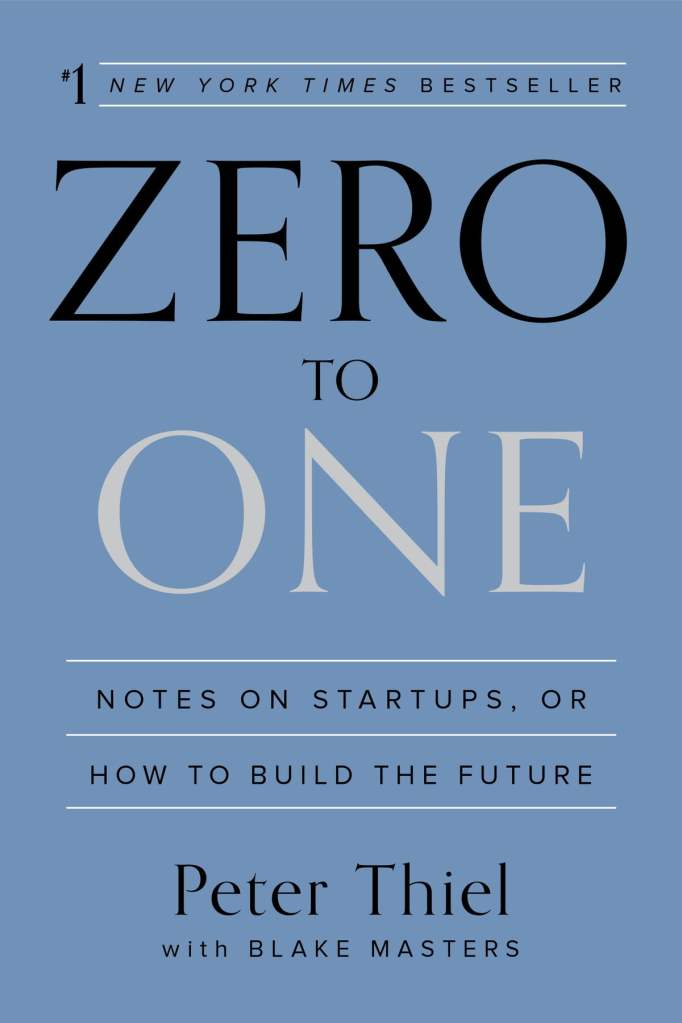
Zero to One is a bestselling business book written by entrepreneur and venture capitalist Peter Thiel. The book explores the process of innovation and the strategies that entrepreneurs can use to build successful companies from scratch. Thiel draws on his experiences as a co-founder of PayPal and as a prominent investor in Silicon Valley to offer insights and advice for aspiring entrepreneurs.
“Every moment in business happens only once. The next Bill Gates will not build an operating system. The next Larry Page or Sergey Brin won’t make a search engine. And the next Mark Zuckerberg won’t create a social network. If you are copying these guys, you aren’t learning from them.”
Peter Thiel

Zero to One is organized into seven chapters, each covering a different aspect of startup development and growth. Here is a summary of each chapter:
Chapter 1: The Challenge of the Future
In the first chapter, Thiel argues that the future is unpredictable and that the only way to create a successful startup is to build something new and innovative. He describes the difference between horizontal progress (doing more of what already exists) and vertical progress (creating something entirely new).
Chapter 2: Party Like It’s 1999
In the second chapter, Thiel reflects on the dot-com bubble of the late 1990s and early 2000s, which saw many startups fail due to a lack of innovation and a focus on short-term profits. He argues that startups should focus on creating value for their customers rather than chasing quick profits.
Chapter 3: All Happy Companies Are Different
In the third chapter, Thiel discusses the importance of building a unique and differentiated product or service. He argues that successful companies create a monopoly by being the only provider of a certain product or service, and that this requires a unique and innovative approach.
Chapter 4: The Ideology of Competition
In the fourth chapter, Thiel critiques the idea that competition is always beneficial for consumers and businesses. He argues that in many cases, competition leads to a race to the bottom in which companies compete on price rather than quality or innovation. He advocates for a focus on creating value rather than simply beating the competition.
Chapter 5: Last Mover Advantage
In the fifth chapter, Thiel argues that the last company to enter a market can have a significant advantage over its competitors. He describes this as the “last mover advantage” and argues that it can be leveraged by companies that focus on creating a unique and differentiated product or service.
Chapter 6: You Are Not a Lottery Ticket
In the sixth chapter, Thiel challenges the idea that success in the startup world is based on luck or chance. He argues that successful entrepreneurs are those who create and execute a clear plan, rather than relying on luck or external factors.
Chapter 7: Follow the Money
In the final chapter, Thiel discusses the role of capital in startup development and growth. He argues that startups should focus on creating value for their customers and building a strong business model, rather than simply chasing investment dollars. He also advocates for a long-term approach to building a successful startup, rather than focusing on short-term gains.
Throughout the book, Thiel emphasizes the importance of innovation and differentiation in startup development. He argues that successful companies create a monopoly by being the only provider of a certain product or service, and that this requires a unique and innovative approach. He also challenges the conventional wisdom around competition and luck, arguing that success in the startup world is based on clear planning and execution.
One of the key takeaways from the book is the importance of creating a unique and differentiated product or service. Thiel argues that successful companies create a monopoly by being the only provider of a certain product or service, and that this requires a unique and innovative approach. This idea is illustrated by examples from Thiel’s own experience, such as PayPal’s early focus on security and fraud prevention.
Another important takeaway from the book is the idea that successful entrepreneurs are those who create and execute a clear plan, rather than relying on luck or chance. Thiel argues that startups should focus on creating value for their customers and building a strong business model
 Book Movie Technology Reviews Fitness Wellness Health Tips