
The Ultimate Science Fiction Reading List
Top 10 Must-Read Books
1. Dune
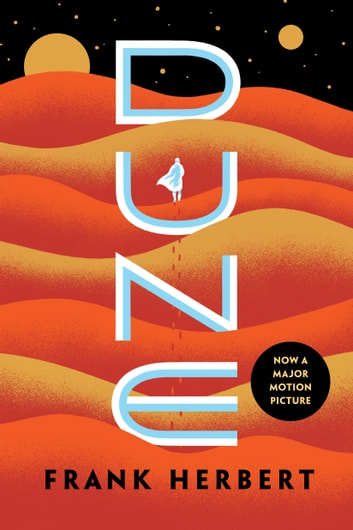
“Dune” by Frank Herbert is a classic science fiction novel that has captured the imaginations of readers for decades. First published in 1965, the book is set in the distant future and tells the story of a young man named Paul Atreides, the son of a noble family tasked with overseeing the desert planet Arrakis, which is the only source of the valuable spice, melange. The novel is a complex, multi-layered epic that combines elements of science fiction, fantasy, and political intrigue.
At its core, “Dune” is a story about power and the lengths to which people will go to obtain and maintain it. The planet Arrakis is a harsh, unforgiving environment, and the various factions vying for control of the spice trade are depicted as ruthless and cunning. Paul Atreides, who is initially a naive and inexperienced young man, must navigate these treacherous waters if he is to survive and fulfill his destiny as the leader of the Fremen, the indigenous people of Arrakis.
One of the most compelling aspects of “Dune” is the world-building. Herbert creates a rich and detailed universe, filled with unique cultures, technology, and political structures. The planet Arrakis itself is a character in the book, a harsh and unforgiving place that is both vital and dangerous. The Spice, which is central to the story, is described as a mysterious and powerful substance that can enhance physical and mental abilities, as well as extend life. The different factions, each with their own motivations and agendas, all revolve around the Spice and its production.
Another strength of “Dune” is the characters. Herbert creates a cast of complex and multifaceted characters, each with their own strengths, weaknesses, and motivations. Paul Atreides, the protagonist, is a compelling and relatable character who undergoes a profound transformation over the course of the book. The supporting cast, including his mentor, Duncan Idaho, and his love interest, Chani, are equally well-drawn and add depth to the story. The villains, particularly the Harkonnen family, are equally memorable and are depicted as cruel and cunning opponents.
“Dune” is also a book with a strong environmental message. The planet Arrakis is depicted as a place that has been ravaged by the actions of its human inhabitants, who have stripped the land of its resources and left behind a barren wasteland. The book is a warning about the dangers of exploiting natural resources and the importance of preserving the environment.
Finally, it’s worth mentioning that “Dune” is a novel that has had a lasting impact on the science fiction genre. It has been referred to as one of the most influential science fiction novels of all time and has inspired countless other works of fiction, from books and movies to video games. Its themes of power, environmentalism, and personal transformation have resonated with generations of readers and continue to do so to this day.
In conclusion, “Dune” is a classic science fiction novel that is well worth reading. Its rich world-building, complex characters, and thought-provoking themes make it a timeless classic that continues to captivate new generations of readers. Whether you’re a fan of science fiction or just looking for a good book to read, “Dune” is sure to provide an engaging and memorable experience.
2. Neuromancer
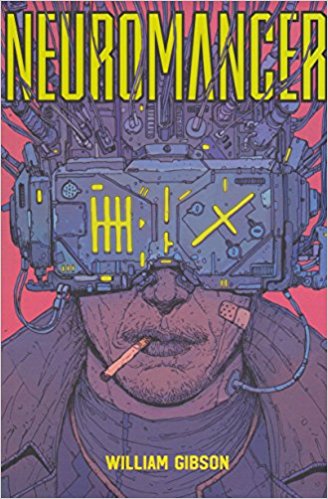
“Neuromancer” by William Gibson is a groundbreaking science fiction novel that explores the intersection of technology, culture, and identity in a future world where virtual reality and artificial intelligence have changed the way people live and interact. First published in 1984, the book is widely considered to be one of the most influential works of science fiction in the past few decades and has won numerous awards, including the Nebula Award, the Hugo Award, and the Philip K. Dick Award.
At its core, “Neuromancer” is a story about a washed-up computer hacker named Case who is recruited by a mysterious employer to pull off one last job. The story takes place in a dystopian future where the world is controlled by powerful corporations and the line between the physical and virtual realms is blurred. Case must navigate this complex and dangerous world while also dealing with his own personal demons.
One of the most striking aspects of “Neuromancer” is Gibson’s vivid and imaginative world-building. The world he creates is a post-industrial, hyper-technological wasteland where virtual reality is just as real as the physical world and cybercrime is rampant. The characters in the book are equally diverse and complex, each with their own motivations and personal demons. Case is a sympathetic and relatable protagonist who is both vulnerable and resilient, while his partner, Molly, is a deadly and enigmatic ally.
Another key strength of “Neuromancer” is its writing style. Gibson’s prose is often described as “cyberpunk,” a term that he helped to popularize. The writing is dense and atmospheric, filled with vivid imagery and a sense of wonder. The novel’s narrative is also fragmented and non-linear, which contributes to the dreamlike quality of the story.
“Neuromancer” is also a book that is ahead of its time in terms of its themes and ideas. The novel explores the impact of technology on society and the individual, as well as the dangers of unchecked corporate power. It also raises questions about the nature of reality and the self, and the relationship between the physical and virtual realms. These themes continue to be relevant and thought-provoking today.
In conclusion, “Neuromancer” is a landmark science fiction novel that has earned its place in the pantheon of great science fiction works. Its vivid world-building, complex characters, and thought-provoking themes make it a must-read for fans of science fiction and those interested in the intersections of technology, culture, and identity. Whether you’re a fan of cyberpunk or just looking for a great science fiction book, “Neuromancer” is sure to captivate and challenge you.
3. The Hitchhiker’s Guide to the Galaxy” by Douglas Adams
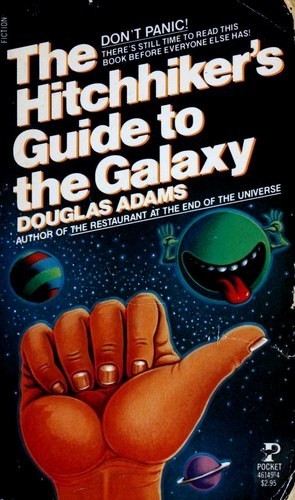
“The Hitchhiker’s Guide to the Galaxy” by Douglas Adams is a comedic science fiction series that has captivated readers for over four decades. First published in 1979, the series consists of five books and has been adapted into various forms of media, including radio, television, film, and video games.
At its core, “The Hitchhiker’s Guide to the Galaxy” is a satire of science fiction and a commentary on the human condition. The story follows the adventures of Arthur Dent, an ordinary human who is whisked away from Earth just moments before it is destroyed to make way for a hyperspace bypass. He finds himself on a wild and crazy journey through the universe, accompanied by Ford Prefect, an alien researcher for the eponymous “Hitchhiker’s Guide to the Galaxy,” and a depressed robot named Marvin.
One of the defining characteristics of “The Hitchhiker’s Guide to the Galaxy” is its humor. The series is filled with absurd, slapstick humor and a dry, British wit that has earned it a cult following. The characters are quirky and endearing, and their interactions are often laugh-out-loud funny. The humor is often absurd, but it’s also clever and insightful, making fun of both science fiction and the human condition.
Another strength of “The Hitchhiker’s Guide to the Galaxy” is its world-building. The universe that Douglas Adams creates is vast, imaginative, and filled with strange and wonderful creatures. From the planet where the people evolved from carpets, to the civilization of hyper-intelligent beings who are all-knowing and all-powerful, the series is filled with imaginative and hilarious ideas.
The writing style of “The Hitchhiker’s Guide to the Galaxy” is also noteworthy. Douglas Adams was a master of the English language, and his writing is often described as “stream-of-consciousness.” The writing is fast-paced, witty, and often surreal, and it perfectly captures the absurdity of the universe he has created.
“The Hitchhiker’s Guide to the Galaxy” is also a book that is ahead of its time in terms of its themes and ideas. The series explores the meaning of life and the universe, and raises questions about the nature of existence, consciousness, and the human condition. The series also comments on the absurdity of bureaucracy, the dangers of technology, and the follies of humanity. These themes continue to be relevant and thought-provoking today.
In conclusion, “The Hitchhiker’s Guide to the Galaxy” is a delightful and entertaining series that is sure to captivate and challenge readers. Its humor, imaginative world-building, and insightful commentary on the human condition make it a must-read for fans of science fiction and anyone looking for a good laugh. Whether you’re a long-time fan or a newcomer to the series, “The Hitchhiker’s Guide to the Galaxy” is sure to delight and entertain you.
4. Ender’s Game
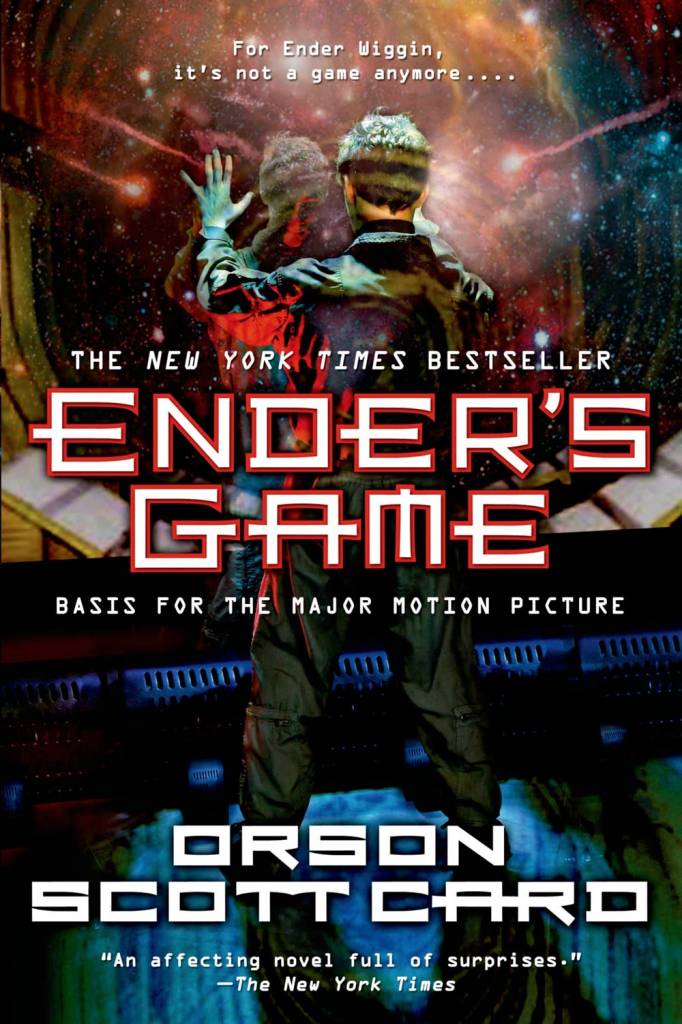
“Ender’s Game” by Orson Scott Card is a science fiction novel that explores the themes of war, strategy, and leadership through the story of a young boy named Ender Wiggin. Published in 1985, the book has become a classic in the science fiction genre and has been widely read and acclaimed.
The story is set in a future where humanity is facing a threat from a race of alien invaders known as the Formics. In an effort to prepare for the next invasion, the military has created a program to train the best and brightest young children as future leaders. Ender Wiggin is a young prodigy who is selected to enter the program and is quickly recognized as one of the most gifted students.
One of the strengths of “Ender’s Game” is its character development. Ender Wiggin is a complex and multi-faceted character, and his journey from a young boy to a seasoned commander is both fascinating and emotionally engaging. The other characters in the book are also well-developed and provide a rich tapestry of perspectives and opinions.
The themes of war and strategy are central to the story and are explored in depth. Through Ender’s experiences, the reader is able to see the psychological toll of war, the importance of empathy, and the delicate balance between strategy and tactics. These themes are relevant not only to the story but also to the real world, and they add depth and meaning to the narrative.
The world-building in “Ender’s Game” is also impressive. Card creates a believable and detailed future world that is both familiar and alien. The technology, society, and politics of this future world are carefully crafted and provide a rich backdrop for the story.
Another strength of “Ender’s Game” is its writing style. Card is a master of the science fiction genre and his writing is clear, concise, and engaging. The pacing of the story is well-balanced and the dialogue is natural and believable. The writing is also infused with a sense of wonder and imagination that is sure to captivate the reader.
In conclusion, “Ender’s Game” is a masterpiece of science fiction that is both entertaining and thought-provoking. Its compelling characters, rich themes, and imaginative world-building make it a must-read for fans of the genre. Whether you are a longtime fan or a newcomer to the series, “Ender’s Game” is a book that is sure to captivate and challenge you.
5. The Martian
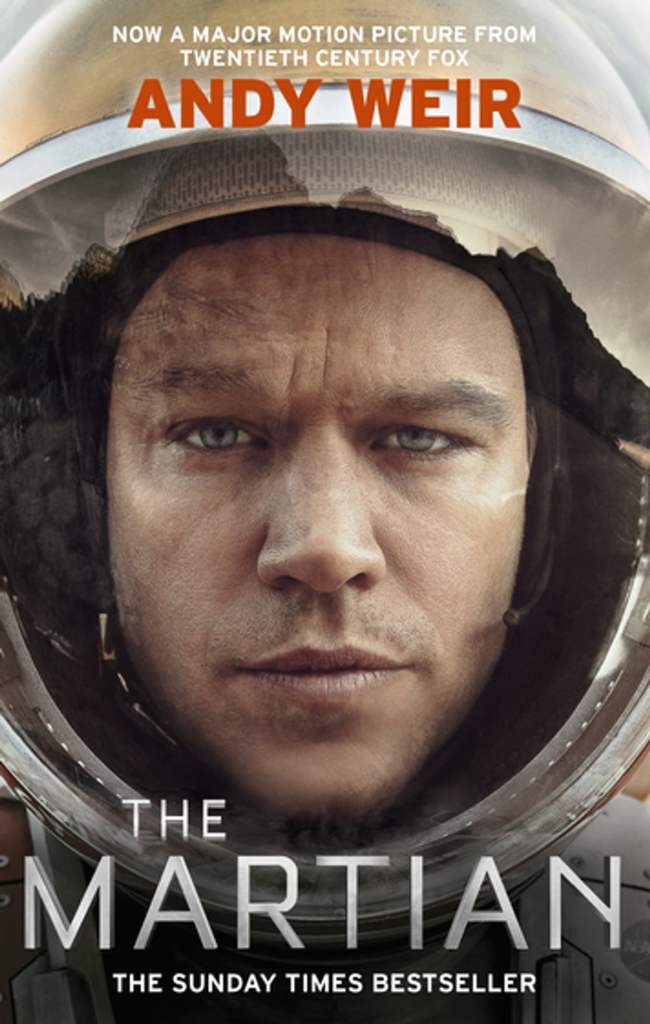
“The Martian” by Andy Weir is a science fiction novel that tells the story of an astronaut stranded on Mars who must use his scientific knowledge and resourcefulness to survive and find his way back to Earth. The book was first self-published in 2011 and quickly gained a following, leading to its re-release by a major publishing house and its adaptation into a popular film.
One of the strengths of “The Martian” is its protagonist, Mark Watney. Mark is a botanist and engineer who is part of a manned mission to Mars. When he is presumed dead and left behind by his crew, Mark must use his scientific knowledge and problem-solving skills to survive in the harsh Martian environment. He is a relatable and likable character, and his journey is both exciting and emotionally engaging.
The science in “The Martian” is another standout aspect of the book. The author, Andy Weir, has a background in computer science, and it shows in the meticulous attention to detail in the science and technology depicted in the book. The science is woven seamlessly into the narrative, and it is clear that Weir has done his research. This attention to detail not only makes the story feel plausible but also makes it more exciting and engaging for readers who are interested in science and technology.
The themes of survival and perseverance are central to the story, and they are explored in depth. Mark’s struggles to survive on Mars are both harrowing and inspiring, and his determination and resourcefulness are sure to resonate with readers. These themes are combined with a sense of humor and optimism that make the story both enjoyable and uplifting.
The writing in “The Martian” is clear and engaging, and the pacing of the story is well-balanced. The dialogue is natural and the descriptions of the Martian landscape are vivid and imaginative. The writing style is accessible and easy to read, making the book appealing to a wide range of readers.
In conclusion, “The Martian” is a must-read for fans of science fiction and anyone who loves a good survival story. Its compelling protagonist, attention to detail in the science, and themes of perseverance and survival make it an engaging and enjoyable read. Whether you’re a longtime fan of the genre or a newcomer, “The Martian” is a book that is sure to captivate and entertain.
6.Snow Crash

“Snow Crash” by Neal Stephenson is a classic science fiction novel that explores the intersection of technology, society, and humanity. The book was first published in 1992 and remains one of the most influential and groundbreaking works of science fiction.
The story takes place in a dystopian future where the virtual world and the real world are inextricably intertwined. The protagonist, Hiro Protagonist, is a hacker who navigates the virtual world of the Metaverse and the real world of Los Angeles in search of the truth about a mysterious new drug called Snow Crash. Along the way, he encounters a cast of colorful characters, including a powerful business magnate and a street-wise warrior, and uncovers a sinister plot to control the minds of humanity through the power of information and technology.
One of the key strengths of “Snow Crash” is its imaginative and thought-provoking concept of the Metaverse. Stephenson presents a vivid and believable vision of a virtual world that is fully immersive and as real as the physical world. The idea of the Metaverse has had a profound impact on the science fiction genre and continues to be a source of inspiration for writers and filmmakers.
The writing in “Snow Crash” is also top-notch, with Neal Stephenson’s distinctive style on full display. The dialogue is witty, the descriptions are vivid, and the pacing is fast-moving and action-packed. The book is filled with memorable scenes and moments that will stick with readers long after they have finished reading.
Another strength of “Snow Crash” is its exploration of the impact of technology on society. Stephenson presents a cautionary tale about the dangers of technology, showing how it can be used to control and manipulate people and the power it holds over individuals and societies. He raises important questions about the role of technology in shaping our world and our lives and the implications of this for our future.
The characters in “Snow Crash” are well-drawn and engaging, with Hiro Protagonist as the standout. Hiro is a complex and charismatic protagonist who is easy to root for and whose journey through the book is both exciting and thought-provoking. The supporting characters are also well-written and add depth and complexity to the story.
In conclusion, “Snow Crash” is a must-read for fans of science fiction and anyone interested in the intersection of technology, society, and humanity. With its imaginative concept of the Metaverse, well-written characters, and thought-provoking exploration of the impact of technology, “Snow Crash” is a classic that continues to be relevant and influential today. Whether you’re a longtime fan of the genre or a newcomer, “Snow Crash” is a book that is sure to captivate and entertain.
7. Brave New World

“Brave New World” by Aldous Huxley is a classic dystopian novel that was first published in 1932. It presents a bleak vision of a future society in which the pursuit of pleasure and happiness has become the primary goal, and individuality and freedom have been sacrificed in the process.
The story takes place in a world where people are born and raised in test tubes, conditioned to believe in the superiority of the society they live in and assigned to predetermined castes based on their abilities and characteristics. The protagonist, Bernard Marx, is a misfit who challenges the conventions of this society and ultimately becomes an outcast. He is joined by John, a “savage” who was raised outside of this world and is horrified by what he sees.
One of the key strengths of “Brave New World” is its prescient and thought-provoking exploration of the impact of science and technology on society. Huxley presents a dystopian vision of a future in which advances in genetics, psychology, and technology have been used to create a society that is seemingly perfect, but is in reality oppressive and dehumanizing. He raises important questions about the relationship between science and society, the role of technology in shaping our lives and our world, and the dangers of blindly pursuing progress and efficiency.
The writing in “Brave New World” is top-notch, with Huxley’s clear and concise style on full display. The descriptions are vivid and the dialogue is insightful, providing a nuanced and nuanced view of the world and the characters that inhabit it. The pacing is fast-moving and the book is filled with memorable scenes and moments that will stay with readers long after they have finished reading.
The characters in “Brave New World” are well-drawn and engaging, with Bernard Marx as the standout. Bernard is a complex and flawed protagonist who provides a compelling perspective on the world and the issues it raises. The supporting characters are also well-written and add depth and complexity to the story.
In conclusion, “Brave New World” is a must-read for fans of science fiction and anyone interested in exploring the relationship between science, technology, and society. With its prescient vision of a dystopian future, well-written characters, and thought-provoking exploration of the impact of technology, “Brave New World” remains a classic and continues to be relevant and influential today. Whether you’re a longtime fan of the genre or a newcomer, “Brave New World” is a book that is sure to captivate and entertain.
8. Foundation
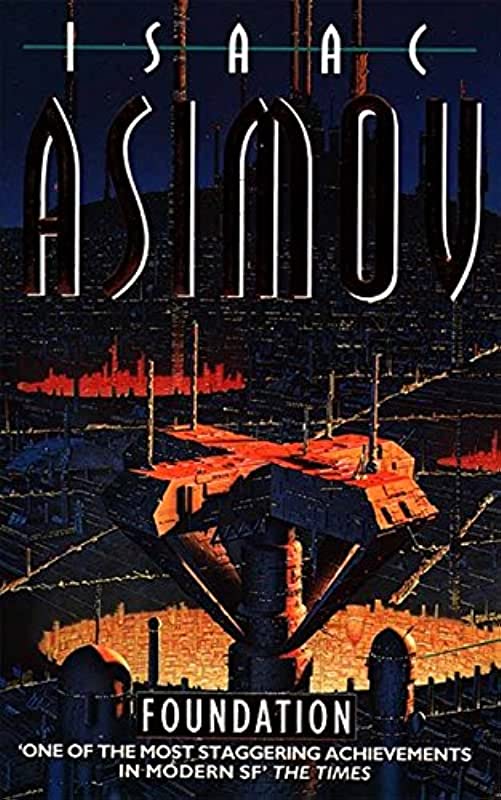
“Foundation” by Isaac Asimov is a classic science fiction novel that was first published in 1951. It is the first book in the “Foundation” series, which is widely considered one of the most influential and innovative works in the genre.
The story takes place in the future, where humanity has colonized the galaxy and is ruled by the Galactic Empire. However, the Empire is in decline, and Hari Seldon, a mathematician and psychologist, predicts that it will soon collapse and be followed by a period of chaos and destruction that will last for thousands of years. To mitigate the effects of this collapse, Seldon creates the Foundation, a group of scientists and engineers tasked with preserving humanity’s knowledge and culture and ensuring the eventual reemergence of a new and more enlightened society.
One of the key strengths of “Foundation” is its innovative and complex storytelling. Asimov uses the concept of psychohistory, a mathematical approach to predicting human behavior, to weave together a complex and nuanced story that spans generations and encompasses a wide range of characters, cultures, and worlds. The pacing is brisk and the world-building is outstanding, with vivid descriptions of the futuristic society and the various worlds and cultures that exist within it.
The characters in “Foundation” are well-written and engaging, with Hari Seldon as the standout. Seldon is a fascinating and complex protagonist who provides a compelling perspective on the world and the issues it raises. The supporting characters are also well-written and add depth and complexity to the story.
In conclusion, “Foundation” is a must-read for fans of science fiction and anyone interested in exploring the impact of science and technology on society. With its innovative storytelling, well-written characters, and thought-provoking exploration of the future, “Foundation” remains a classic and continues to be relevant and influential today. Whether you’re a longtime fan of the genre or a newcomer, “Foundation” is a book that is sure to captivate and entertain.
9. Do Androids Dream of Electric Sheep?

“Do Androids Dream of Electric Sheep?” by Philip K. Dick is a seminal science fiction novel first published in 1968. Set in a post-apocalyptic world, the story follows Rick Deckard, a bounty hunter tasked with “retiring” rogue androids who have infiltrated society. As Deckard hunts the androids, he grapples with his own identity and the morality of his job, leading him to question the very nature of humanity and consciousness.
One of the strengths of “Do Androids Dream of Electric Sheep?” is its exploration of complex philosophical and ethical issues. The androids, who are virtually indistinguishable from humans, force Deckard and the reader to consider what it means to be human and the implications of artificially creating consciousness. The novel also touches on themes of identity, empathy, and the role of religion and spirituality in a technologically advanced society.
The world-building in “Do Androids Dream of Electric Sheep?” is rich and imaginative, with a fully realized post-apocalyptic society that feels both believable and surreal. The bleak and oppressive atmosphere of the world adds depth and urgency to the story, while the descriptions of the advanced technology, such as the androids and the advanced form of virtual reality, are both fascinating and thought-provoking.
Rick Deckard is a complex and well-written protagonist, who is both a flawed and sympathetic character. His journey throughout the book, both physically and emotionally, is compelling and provides a captivating perspective on the world and the issues it raises. The supporting characters, including the androids and Deckard’s wife, are also well-written and add depth and nuance to the story.
In conclusion, “Do Androids Dream of Electric Sheep?” is a must-read for fans of science fiction and anyone interested in exploring the impact of technology on society. With its thought-provoking exploration of complex philosophical and ethical issues, rich world-building, and compelling characters, “Do Androids Dream of Electric Sheep?” remains a classic and continues to be relevant and influential today. Whether you’re a longtime fan of the genre or a newcomer, “Do Androids Dream of Electric Sheep?” is a book that is sure to captivate and entertain.
10. The War of the Worlds
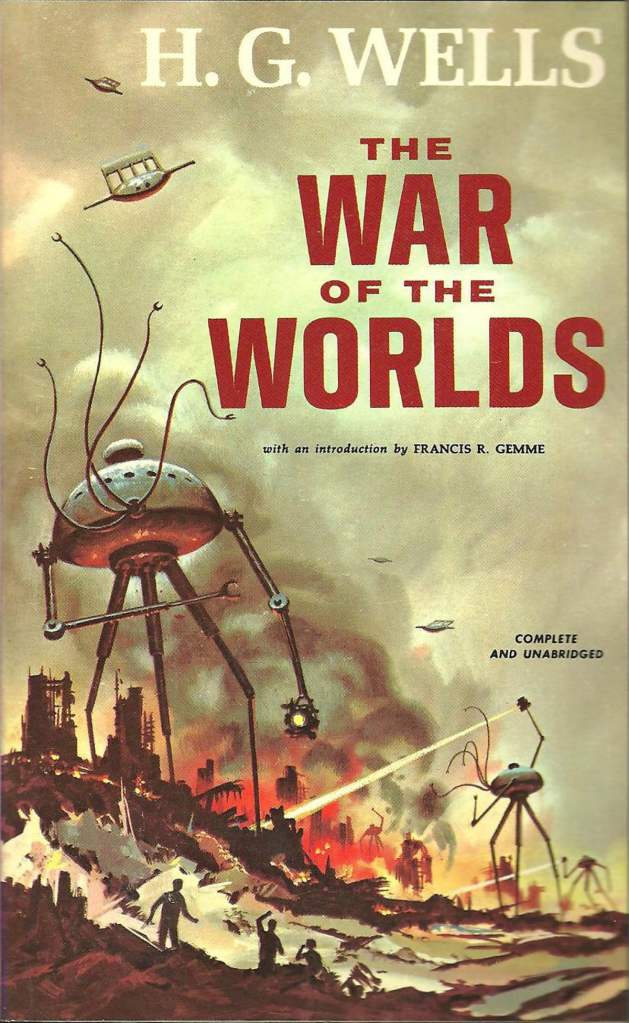
“The War of the Worlds” by H.G. Wells is a classic science fiction novel first published in 1898. The story follows the events of a Martian invasion of Earth, and the attempts of humanity to fight back against the seemingly invincible alien attackers.
One of the strengths of “The War of the Worlds” is its ability to create a sense of suspense and tension throughout the story. Wells masterfully builds up the threat of the Martians, and the chaos and destruction they bring to Earth, creating a sense of urgency that keeps the reader engaged. The use of a first-person narrator also adds to the tension, as the reader is given a front-row seat to the events of the invasion.
Another strength of the novel is its exploration of humanity and our place in the universe. The Martians serve as a symbol of a superior, technologically advanced civilization, and their invasion forces humanity to confront the possibility that we may not be alone in the universe. The novel also touches on themes of colonialism, power, and survival, making it relevant even today.
The writing style of “The War of the Worlds” is elegant and straightforward, making it an accessible and engaging read. Wells uses clear and concise language to describe the events of the invasion, while still capturing the scale and horror of the situation. The novel also employs elements of horror and suspense, adding to the overall impact of the story.
In conclusion, “The War of the Worlds” is a classic science fiction novel that is well worth reading. With its suspenseful storytelling, exploration of humanity’s place in the universe, and timeless themes, “The War of the Worlds” is a book that has stood the test of time and remains a seminal work of science fiction. Whether you’re a fan of the genre or simply looking for a classic novel to add to your reading list, “The War of the Worlds” is a book that is sure to entertain and captivate.
 Book Movie Technology Reviews Fitness Wellness Health Tips